
Grace Wisher: The Hidden Hand Behind an American Symbol
An Independence Day historical spotlight on a young Black Baltimorean whose fingerprints are on a national symbol.
By PCOM Perspectives
Summer Issue · July 2026 · 4 min read
**Editorial note.** Details of Grace Wisher's life are documented unevenly in the historical record. Before citing specific claims — dates, ages, exact role in the flag's making — verify against reputable historical sources such as the Smithsonian's National Museum of American History and the Star-Spangled Banner Flag House in Baltimore. This piece is a spotlight, not a comprehensive biography.
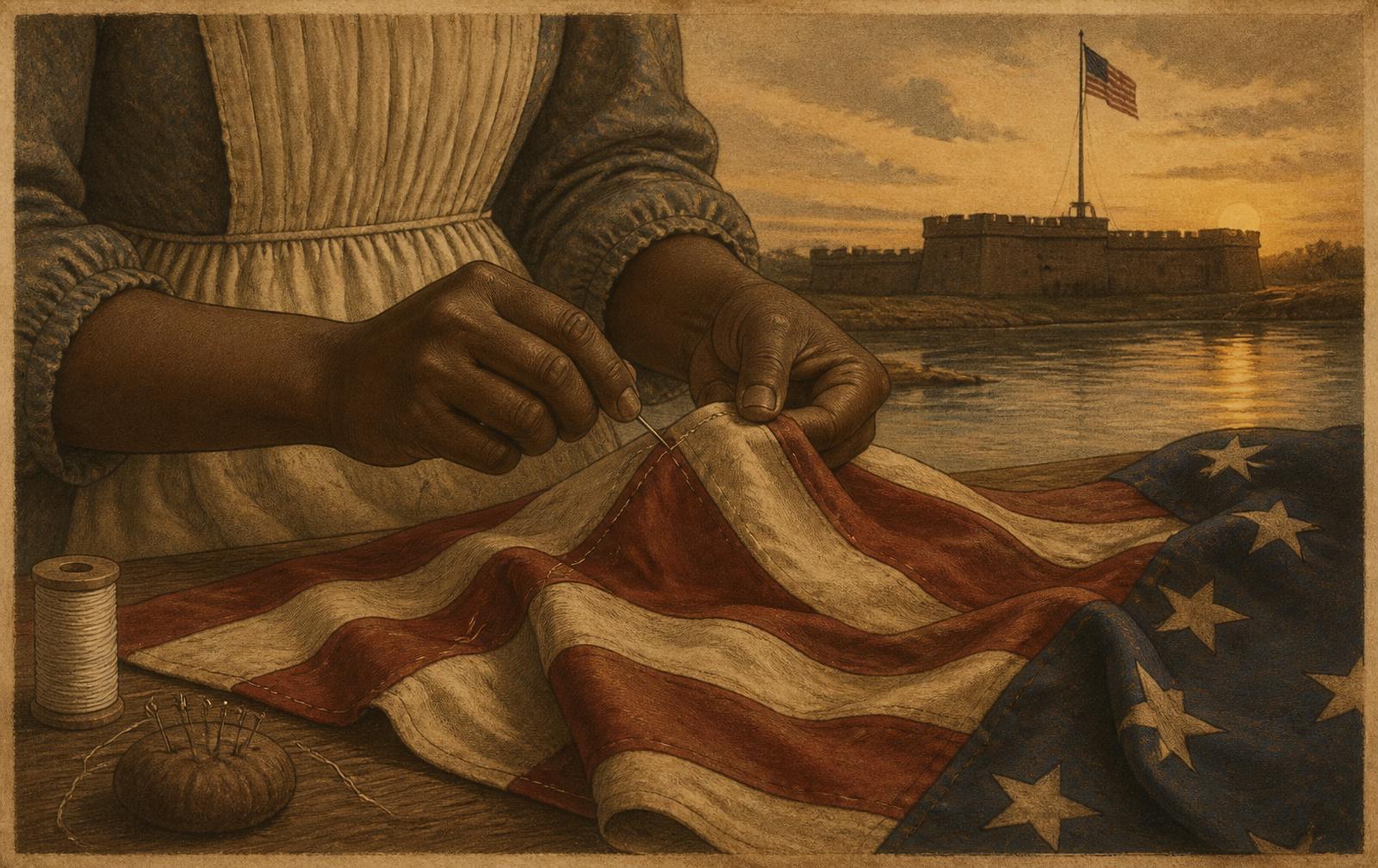
The Star-Spangled Banner — the enormous garrison flag that flew over Fort McHenry in September 1814 and inspired Francis Scott Key's poem — is one of the most familiar symbols in American history. It is also the product of a household of women and girls whose names most Americans have never learned.
One of those names is Grace Wisher. She was a free African American girl, indentured to Baltimore flagmaker Mary Pickersgill in the early 1810s, when Pickersgill was commissioned to sew the 30-by-42-foot flag. Grace was roughly thirteen years old at the time, apprenticed to learn housework and needlework in Pickersgill's household. Historians widely credit her, along with Pickersgill's daughter, nieces, and an enslaved servant of the household, as part of the small group of hands that stitched the banner together.
That fuller story matters. A national symbol was made in a working household in Baltimore by women and girls whose labor and skill were essential — and, for a long time, uncredited. Grace Wisher's presence in the historical record reminds us that Black Americans were not adjacent to the founding story of this country's flag. They were, quite literally, sewing it.
This Fourth of July, when you look at the flag, look for the seams. Look for the names next to Pickersgill's. Look for Grace.